
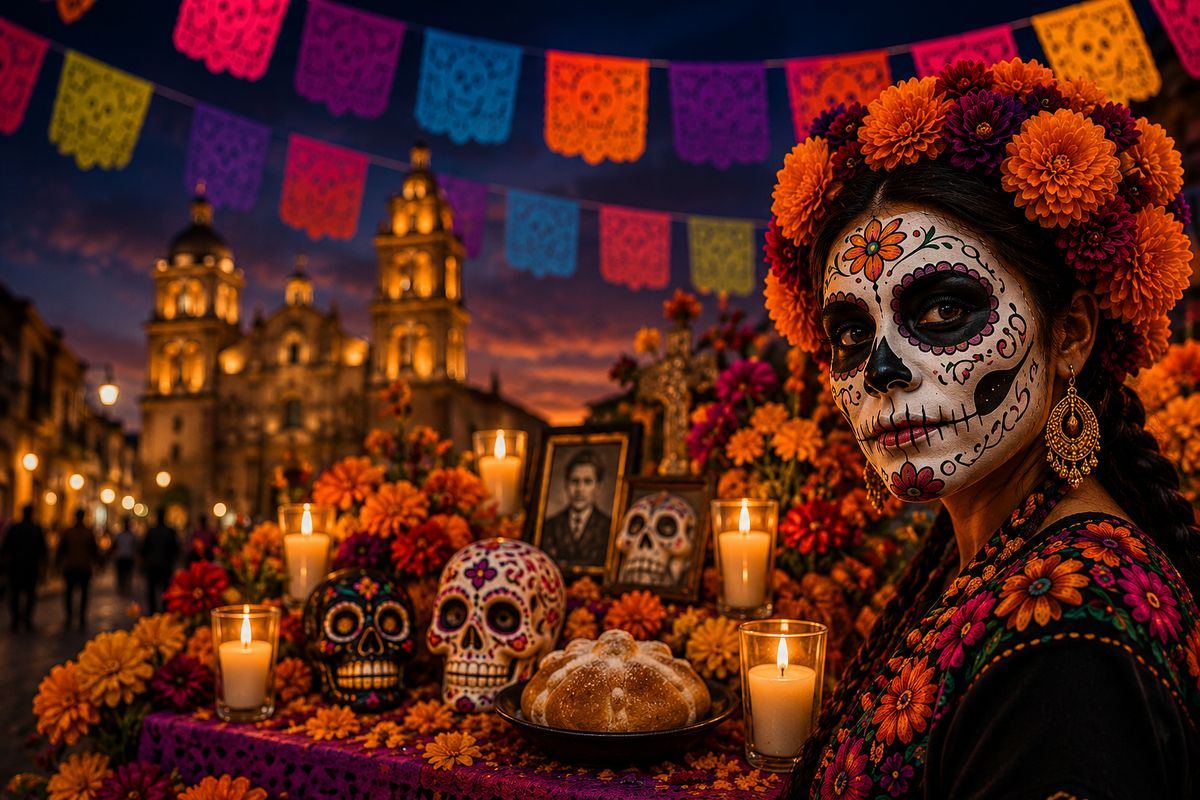
Every year, more tourists visit Mexico for Día de los Muertos. And every year, most of them misunderstand what they're seeing. This is not Mexican Halloween. There are no haunted houses. Nobody is trying to scare you.
Day of the Dead is a celebration of life. It's families welcoming deceased loved ones back for a visit. It's joyful, beautiful, and deeply personal. And if you experience it right, it will change how you think about death.
What Day of the Dead Actually Is#
The core belief: once a year, the spirits of deceased loved ones return to the world of the living to visit their families. The living make this visit as welcoming as possible — they build altars with the deceased person's favorite foods, drinks, photos, and belongings. They clean and decorate graves. They stay up all night in cemeteries, talking, eating, and drinking with their dead.
November 1 (Día de Todos los Santos, the day of the "angelitos"): Honors children who have died. Altars feature toys, candy, and white flowers.
November 2 (Día de los Muertos): Honors deceased adults. Altars feature tequila, mole, pan de muerto (bread of the dead), cigarettes — whatever the person loved in life.
The idea is simple and beautiful: death is not an ending. Your loved ones are still with you. Once a year, the boundary between worlds thins, and you can be together again.
UNESCO lists the Indigenous festivity dedicated to the dead as part of the intangible cultural heritage of humanity. What goes on a family altar, and why: the Day of the Dead altar (ofrenda).
Day of the Dead 2026 at a Glance#
| Date | What happens |
|---|---|
| Wed, October 28 | In some regions, families remember those who died suddenly or violently. Flower markets start to fill. |
| Sat, October 31 | Altars are finished. In Oaxaca, comparsas (parades) start and Xoxocotlán holds its famous all-night cemetery vigil. Mexico City's Gran Desfile is confirmed for this day. |
| Sun, November 1 | Día de Todos los Santos: children who have died are remembered. In Pátzcuaro, families hold the candlelit vigil on Janitzio Island that night. |
| Mon, November 2 | Día de los Muertos: adults are remembered. Families visit and decorate graves; Mixquic's cemetery glows with candles that night. |
2026 falls on a weekend, which means bigger crowds and fuller hotels everywhere. Customs vary a lot from one region and one town to the next, so treat the table as a guide, not a timetable.
Where to Experience It#
Oaxaca (The Best, Period)#
Oaxaca is the heart of Day of the Dead celebrations in Mexico. The traditions here are the oldest, the most elaborate, and the most authentic. If you only go to one place, go to Oaxaca.
What happens:
- Comparsas (parades): Nightly parades through the streets with giant puppets, bands, dancers, and face-painted revelers. October 31 – November 2.
- Cemeteries: Xoxocotlán holds its famous all-night vigil on October 31, and the Panteón General and village cemeteries around the city fill with candles, marigold paths, and families gathered around decorated graves through November 1 and 2.
- Ofrendas (altars): Every home, restaurant, hotel, and public space builds an altar. The ones in the Zócalo and Santo Domingo church are museum-quality.
- Sand tapestries (tapetes de arena): Artists create elaborate designs on the ground using colored sand. They take days to make and are swept away after November 2. Ephemeral art at its most beautiful.
- Mezcal: Oaxaca is the mezcal capital of Mexico. Every mezcalería has special Day of the Dead cocktails and tastings.
Practical tips for Oaxaca:
- Book accommodation 3+ months in advance. The city sells out completely.
- Hotels charge 2–3x normal rates. Budget $80–150/night for mid-range.
- The cemetery vigils happen at night, from October 31 through November 2 depending on the cemetery. Bring warm layers — Oaxaca is at altitude and nights are cold.
- Eat mole negro. Oaxaca has 7 types of mole and Day of the Dead is when families make their best.
Night by night, with the markets and comparsas: Day of the Dead in Oaxaca 2026.
Mexico City (The Biggest Parade)#
Mexico City's Day of the Dead parade is relatively new — it started in 2016 after the James Bond movie Spectre featured a fictional one. But it's become enormous: over 1 million spectators line Paseo de la Reforma for the 3-hour procession of giant floats, puppets, dancers, and marching bands.
What happens:
- The Mega Parade: Saturday, October 31, 2026. Mexico City's culture secretariat has confirmed the date; 2026 is the parade's tenth year. It is free. The start time (reported as 2pm) and the exact route were still preliminary at the time of writing — expect the usual run from Chapultepec along Paseo de la Reforma to the Zócalo, and check the city's official announcement the week before. Arrive 2+ hours early for a spot on Reforma.
- Ofrendas in the Zócalo: The main square fills with massive community altars.
- Mixquic: A small town on the outskirts of CDMX that has one of the most traditional cemetery celebrations. Families place candles on every grave — the entire cemetery glows. Take an organized tour or a ride app; allow 1.5–2 hours each way from the center, more on the night itself.
- Coyoacán: Frida Kahlo's neighborhood has some of the most artistic street celebrations.
Pátzcuaro, Michoacán (The Most Traditional)#
If Oaxaca is the most elaborate and Mexico City is the biggest, Pátzcuaro is the most traditional. The Purépecha indigenous communities around Lake Pátzcuaro have been celebrating Day of the Dead for centuries in ways that predate Spanish colonization.
What happens:
- Janitzio Island: Families paddle canoes across the lake at midnight, candles glowing, to spend the night in the island cemetery with their dead. This is the most iconic image of Day of the Dead.
- Lake traditions: In some Purépecha villages around the lake, older customs such as a traditional duck hunt are still part of the preparations.
- Night vigils: Entire families camp in cemeteries all night with food, music, and prayer.
Note: Pátzcuaro's celebrations are deeply personal and religious. They welcome respectful visitors, but this is not a party — it's a sacred tradition. Ask before photographing families at graves.
How to Be a Respectful Visitor#
Do:
- Ask before taking photos of private altars or families in cemeteries
- Accept food or drinks if a family offers — refusing is rude
- Get your face painted (it's participatory and families love seeing foreigners join in)
- Visit cemeteries — they're public and visitors are welcomed
- Try pan de muerto and mole at every opportunity
Don't:
- Treat it like Halloween
- Wear offensive costumes
- Touch or move items on altars
- Photograph children without asking parents
- Get drunk in cemeteries (a drink is fine; being sloppy is disrespectful)
What to Eat and Drink#
- Pan de muerto: Sweet bread decorated with bone-shaped pieces. Eaten throughout October and November. Every bakery makes their own version.
- Mole: Complex sauce with dozens of ingredients including chocolate, chiles, and spices. Oaxaca's mole negro is the most famous.
- Tamales: Families make hundreds for the holiday. Banana leaf tamales in Oaxaca, corn husk in Mexico City.
- Calaveritas de azúcar: Sugar skulls, often with a name written on the forehead — a friend's as a gift, or a loved one's on the altar. Sweet, crunchy, colorful.
- Mezcal and tequila: Both flow freely. Mezcal in Oaxaca, tequila everywhere else.
- Atole and champurrado: Hot corn-based drinks, thick and sweet. The perfect cemetery nightcap.
Budget#
Oaxaca (5 days, October 30 – November 3, to catch the October 31 vigils):
- Flight from US: $300–600
- Accommodation: $80–150/night (book NOW)
- Food: $20–35/day
- Activities: Mostly free
- Total: $800–1,500 per person
Mexico City (4 days, October 31 – November 3):
- Flight from US: $200–450
- Accommodation: $60–120/night
- Food: $20–30/day
- Activities: Mostly free
- Total: $600–1,100 per person
The Local Friend Difference#
Day of the Dead is deeply personal. The difference between watching a parade and understanding what's happening — between taking a photo of an altar and knowing the story of the person it honors — is enormous. A Local Friend who grew up with this tradition can explain what each element means, take you to the neighborhood celebrations tourists never find, and make sure you experience it with the respect and depth it deserves.
Browse Local Friends in Mexico City
Leer en español: Día de Muertos 2026: fechas, tradiciones y dónde vivirlo.
Spend Day of the Dead with someone who grew up with it.
Meet Local Friends in Mexico CityEvery big festival and holiday worldwide, month by month, with the dates: the Roavi world events calendar.
In the Yucatán, near Cancún and Tulum, the same days have a Maya name and their own food: Hanal Pixán 2026.
Parade on October 31, Halloween the same night: Halloween in Mexico City explains how the two fit together.
After the Day of the Dead comes Christmas: Las Posadas, nine nights from December 16.
The capital in those weeks: Mexico City in October and November. Getting to Oaxaca: how.
Going for Día de Muertos?#
The questions this guide cannot answer are the current ones: which ofrenda street is open this year, where to stand for the parade, whether Mixquic is worth the trip on your dates. Post them on the Mexico City board, where Mexican members answer: I'm coming for Día de Muertos. Where should I be on November 1 and 2?. Rent a friend in Mexico explains the Local Friend side, honestly thin in Mexico today.
Frequently Asked Questions
When is the Day of the Dead parade in Mexico City in 2026?
Saturday, October 31, 2026, confirmed by Mexico City's culture secretariat. Entry is free. The start time (reported as 2pm) and the exact route were preliminary when this was written; the parade traditionally runs along Paseo de la Reforma to the Zócalo. Arrive at least two hours early.When is Day of the Dead in Mexico 2026?
Day of the Dead 2026 falls on Sunday November 1 and Monday November 2. November 1 honors children who have died (the 'angelitos'), November 2 honors adults. Altars go up and markets fill from late October, and in Oaxaca the parades and cemetery vigils start on October 31.When is the Day of the Dead parade in Mexico City in 2026?
Mexico City's government announces the date and route each year, usually a few weeks ahead. Since it began in 2016 it has been held on a Saturday between late October and early November, so in 2026 expect it on a Saturday around October 31. Check the city's official announcement before you book.Is Day of the Dead on October 31?
The main days are November 1 and 2. October 31 is when many families finish their altars and, in Oaxaca, when the big cemetery vigils and parades begin. In some regions October 28 is set aside for those who died suddenly or violently.Where is the best place to celebrate Day of the Dead in Mexico?
Oaxaca is the most authentic and elaborate celebration. Mexico City has the largest parade (started in 2016). Mixquic and Pátzcuaro are traditional small-town celebrations with candlelit cemeteries. Oaxaca is the #1 recommendation for first-timers.Is Day of the Dead the same as Halloween?
No. Day of the Dead is a celebration of life, not death. Families build altars (ofrendas) with photos, favorite foods, and marigolds to welcome the spirits of deceased loved ones back for a visit. It's joyful, not spooky — a family reunion where some of the guests happen to be dead.


