
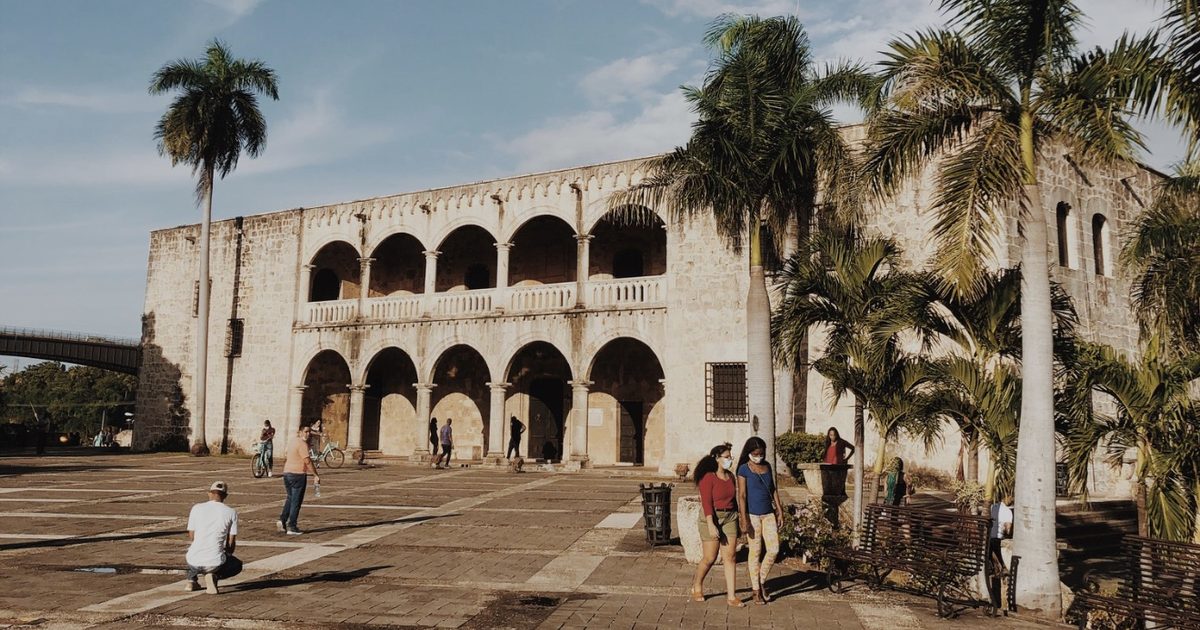
Santo Domingo is the oldest European city in the Americas, founded in 1496. It is vibrant, musical, warm, and massively underrated. It is also a real capital city of more than three million people, which is the honest starting point for this question.
The short answer#
Yes, for the areas visitors actually go to, and with the ordinary awareness any big city asks for. The overwhelming majority of visitors have an entirely uneventful trip.
What that does not mean is that Santo Domingo is Punta Cana. A resort is a controlled environment; a capital is not. The difference between a good trip and a bad one here is almost never luck — it is knowing which twelve blocks you are in, and not carrying your evening around in your hand.
How safe, in context#
The Dominican Republic sits at Level 2 on the US State Department scale — "exercise increased caution" — the same level as France, Italy, Spain and the United Kingdom. The country took more than 11 million visitors last year.
The crime that affects visitors is overwhelmingly opportunistic: phone snatching, bag snatching, a wallet lifted in a crowd. Violent crime against tourists is rare and is not what you should be planning around. Plan around your phone.
Safe areas#
Zona Colonial — the historic centre, and where you will spend most of your time. Well-lit, walkable, heavy police presence, especially at weekends. Comfortable on foot until late.
Piantini and Naco — modern business districts. Malls, restaurants, hotels. Very safe, well maintained, and where a lot of the better food is.
Gazcue — quiet, residential, leafy, next to the Malecón. Fine in daylight, quieter than you might expect after dark.
Bella Vista and Evaristo Morales — residential and unremarkable in the best sense.
The Malecón — the oceanfront boardwalk, busy and fine in the evening, especially on the stretch near the main hotels. Good for sunset. Less good at 3am at the far end.
Where to be more careful#
North of the Zona Colonial. Cross a few streets north of the colonial centre and the character changes quickly. There is no wall and no warning sign — it simply stops being the tourist area. This is the single most common way visitors end up somewhere they did not intend to be.
Villa Mella, Los Alcarrizos, Capotillo. Residential districts with no tourist infrastructure and no reason to visit.
The Malecón late at night, at the quiet end. Busy stretches are fine. Empty ones are like empty seafronts everywhere.
The things that actually happen#
Phone snatching from a moving motorbike. The most common incident by far. It takes a second and it happens at traffic lights, on a pavement, at an outdoor table. The fix is unglamorous: do not walk along holding your phone out, and do not leave it on the table at a terrace.
Taxi overcharging. Street taxis do not use meters and the number quoted to a foreigner is not the number quoted to a Dominican. Use Uber or DiDi — both work well across the city, both are cheap, and both remove the negotiation entirely.
ATM card skimming. Use machines inside bank branches during opening hours rather than street-facing ones.
The unsolicited helper. Someone who attaches themselves to you, shows you something, then wants paying. Not dangerous, just tiresome. A friendly, firm no, gracias ends it.
Is it safe for solo travellers?#
Broadly yes, with the same rules turned up a notch: stay in the Zona Colonial or Piantini, use apps rather than street taxis after dark, and tell someone where you are going.
Women travelling alone should expect verbal attention on the street — piropos. It is common, it is usually not threatening, and ignoring it and continuing to walk is both normal and effective. It is the thing solo travellers report most and the thing that surprises them most, so it is better to know in advance than to meet it cold. There is more detail in the solo female travel guide to the DR.
Practical#
- Uber or DiDi, not street taxis, particularly at night
- A local SIM (Claro or Altice) at the airport, so maps and ride apps work without hunting wifi
- A photocopy of your passport, not the original
- Bottled water — the tap is not for drinking
- Emergency number: 911. It works and it is answered in Spanish
- Some Spanish. English is common in tourist zones and rare outside them, and effort is met generously here
- Leave the camera around your neck in the room
The version nobody writes down#
Every guide can tell you the Zona Colonial is safe. What no guide can tell you is which street got quieter this year, which colmado is worth sitting outside on a Thursday, or whether the block behind your hotel is fine on foot at eleven at night.
That is local knowledge, it changes, and it is exactly the kind of thing someone who lives here answers in one message.
The Dominican Republic local guide covers the rest of the country, or the Santo Domingo guide.
Most visitors spend their time in one district — the Zona Colonial guide covers what that area is actually like.
Planning Santo Domingo? Start with Things to Do in Santo Domingo in 2026: A Local's Guide.
Want someone who lives here to show you around? Rent a local friend in Santo Domingo: how it works, what it costs, and how to do it safely.
For the wider picture, how safe Latin America is for tourists puts the region's numbers in context.
Visiting in December? See how Dominicans do Christmas, from the first parranda to Noche Buena.
Going in February? Dominican Carnival 2027 has the dates and the best cities to see it.
Going out? Santo Domingo nightlife: where locals go, when it starts, and the colmadón.
Frequently Asked Questions
Is the Zona Colonial in Santo Domingo safe?
Yes. It is the historic centre and where visitors spend most of their time: well-lit, walkable and heavily policed, especially at weekends, and comfortable on foot until late. The one thing to know is that it ends without a sign: a few streets north, it stops being the tourist area.How safe is Santo Domingo compared to other cities?
The Dominican Republic is a State Department Level 2 country — the same tier as France, Italy, Spain and the UK — and took over 11 million visitors last year. The crime that reaches visitors is overwhelmingly opportunistic: phone and bag snatching rather than anything violent. Treat it like any large capital, not like a resort strip.Is Santo Domingo safe at night?
In the Zona Colonial, Piantini and Naco, yes — those areas are busy and well patrolled, and walking in the colonial centre late is normal. Take Uber or DiDi rather than a street taxi to get between areas, and avoid the quiet far end of the Malécon and the streets a few blocks north of the colonial centre, where the character changes fast.Is Santo Domingo safe for solo female travellers?
Broadly yes, with the usual rules turned up: stay in the Zona Colonial or Piantini, use ride apps after dark, and tell someone your plans. Expect verbal attention on the street — *piropos* — which is common and usually not threatening; ignoring it and walking on is normal and effective. It surprises people who were not warned, which is the main reason to know beforehand.Is Santo Domingo safe for tourists in 2026?
Yes, Santo Domingo is generally safe for tourists. The Dominican Republic welcomed 11.6 million visitors without major security incidents. Tourist areas like the Zona Colonial and Punta Cana are well-policed. Standard precautions apply — avoid walking alone at night in unfamiliar neighborhoods and use registered taxis or Uber.What areas of Santo Domingo should tourists avoid?
Tourists should exercise extra caution in neighborhoods like Cristo Rey, Villa Juana, and parts of the Malecón late at night. Stick to the Zona Colonial, Piantini, Naco, and Gazcue for the safest experience.Is it safe to use Uber in Santo Domingo?
Yes, Uber and DiDi operate in Santo Domingo and are safe and affordable. They're recommended over street taxis since the fare is fixed and the driver is tracked.
